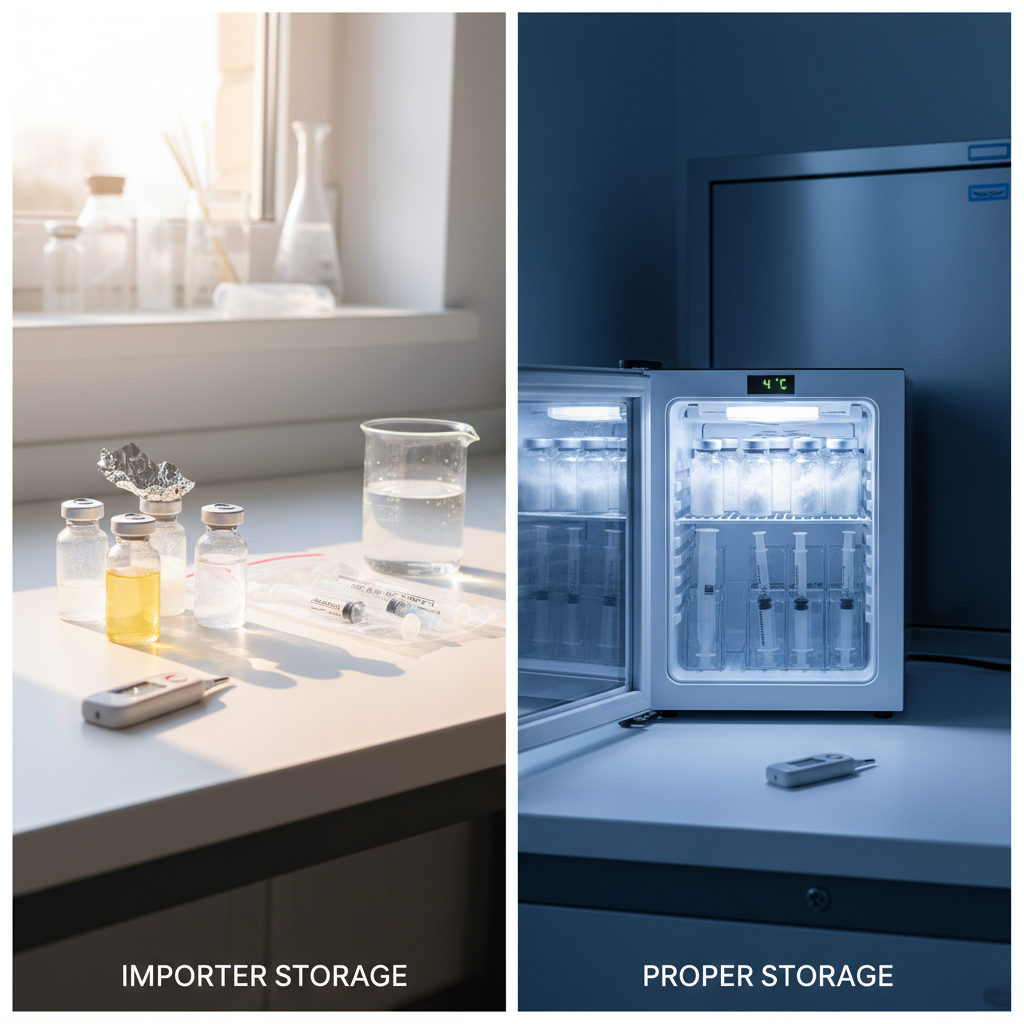
7 Common Peptide Storage Mistakes
You invested in high-purity research peptides. Now don't destroy them with poor storage. These are the 7 mistakes we see researchers make most often, and they're all avoidable.
1. Storing Reconstituted Peptides at Room Temperature
This is the most common and most damaging storage error. Once a lyophilized peptide is reconstituted in solution, it becomes dramatically more susceptible to degradation. Leaving reconstituted peptides at room temperature — even for a few hours — can result in significant degradation depending on the specific peptide. Always return reconstituted peptides to refrigeration (2-8 degrees C) immediately after use. For peptides that won't be used within 1-2 weeks, consider aliquoting and freezing at -20C to avoid repeated freeze-thaw cycles while maintaining stability.
2. Repeated Freeze-Thaw Cycles
Every freeze-thaw cycle introduces mechanical stress from ice crystal formation and thawing, potential pH changes, and oxidative exposure that can degrade peptide bonds and modify amino acid residues. If you need to use a peptide multiple times over several weeks, the correct approach is to aliquot the reconstituted solution into single-use volumes immediately after reconstitution, then freeze the aliquots. Thaw only what you need for each use. This simple practice can extend usable shelf life dramatically compared to repeatedly freezing and thawing the same vial.
3. Using the Wrong Reconstitution Solvent
Not all peptides are created equal when it comes to solubility. Using the wrong solvent can result in incomplete dissolution, aggregation, or accelerated degradation. Most research peptides dissolve well in sterile water or bacteriostatic water (which contains 0.9% benzyl alcohol as a preservative). However, some hydrophobic peptides may require initial dissolution in a small volume of acetic acid, DMSO, or other organic solvent before dilution with aqueous solvent. Always check the manufacturer's reconstitution guidelines for the specific peptide. When in doubt, start with a small amount and add solvent incrementally.
4. Ignoring Light Exposure
Several amino acids — most notably tryptophan, tyrosine, and phenylalanine — are photosensitive. Peptides containing these residues degrade when exposed to UV light or prolonged ambient light. This is particularly relevant for peptides like DSIP (contains tryptophan), GHRP-6 (contains tryptophan), and many growth hormone secretagogues. Store peptides in amber vials when possible, keep them in the dark when not in use, and minimize the time vials spend on the benchtop during preparation. It's a small precaution that protects against a real degradation pathway.
5. Not Maintaining Sterile Technique
Bacteriostatic water contains preservative, but it's not magic. Introducing microbial contamination through poor technique — reusing needles, touching vial septa without swabbing, working in contaminated environments — can compromise both the peptide and your research results. Every time you access a vial, swab the septum with an alcohol prep pad and use a fresh, sterile needle. Work in a clean environment. These are basic aseptic technique principles, but they're frequently ignored in informal research settings with real consequences for product integrity.
6. Storing Lyophilized Peptides in the Refrigerator Instead of the Freezer
Unopened, lyophilized (freeze-dried) peptides should be stored at -20C (standard freezer temperature), not at 2-8C (refrigerator temperature). While lyophilized peptides are substantially more stable than reconstituted solutions, the lower temperature of a freezer significantly extends shelf life — from months to potentially years for most peptides. Refrigerator storage is fine for short-term holding or for reconstituted solutions you'll use within days, but long-term storage of lyophilized stocks belongs in the freezer.
7. No Labeling or Documentation
Failing to label reconstituted vials with the date, concentration, and solvent used is an invitation for confusion and wasted product. At minimum, label every reconstituted vial with: the peptide name, the reconstitution date, the total volume added, the resulting concentration, and the solvent used. Additionally, track how many times a multi-use vial has been accessed and note any visual changes (cloudiness, discoloration, particulates) that might indicate degradation. Proper documentation costs nothing and prevents the expensive mistake of using degraded or misidentified compounds in research.
Research Disclaimer: All information on this page is provided for educational and research purposes only. Products discussed are intended for laboratory research use exclusively. They are not intended for human consumption, therapeutic use, or as dietary supplements. Always follow institutional guidelines and consult published peer-reviewed literature for research protocol development. Not for human consumption.